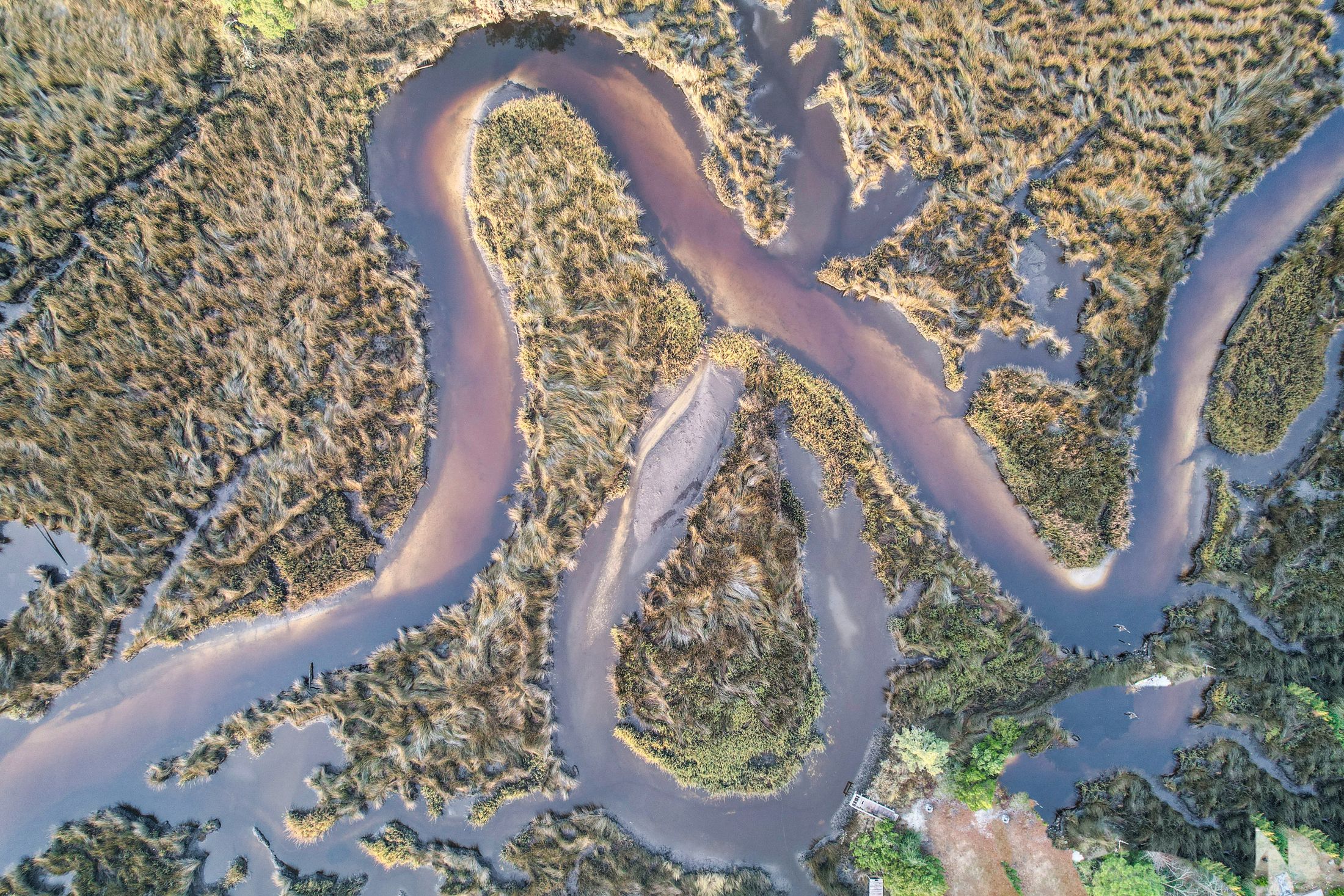
A shoreline is not a fixed line. It is a moving edge shaped by tides, sediment, roots, wind, and seasons. Living shoreline projects work with that movement instead of trying to erase it everywhere.
Protection can also be habitat
Where conditions allow, native marsh plants, coir fiber, oyster reef structures, and carefully placed stone can reduce wave energy while preserving the connection between land and water. Fish and birds retain habitat. Sediment has places to settle. The shoreline can adjust over time.
This is not a universal substitute for engineered protection. Ports, navigation channels, steep banks, and high-energy sites may require different solutions. The useful question is not “natural or built?” but “what combination fits this place and the risk it faces?”
Read the site through more than one season
Good design begins with wave energy, slope, soil, vegetation, boat wakes, drainage, and neighboring properties. A calm summer visit cannot reveal the whole system. Local observations during storms and seasonal high water often explain more than a single survey.
Plan for adaptation
Living systems change. Plant zones shift, individual sections fail, and sediment moves unevenly. Monitoring should be simple enough to repeat: fixed photo points, vegetation coverage, shoreline position, and notes after major storms.
The goal is not a shoreline frozen in time. It is a protective edge with enough life and flexibility to keep doing its job.